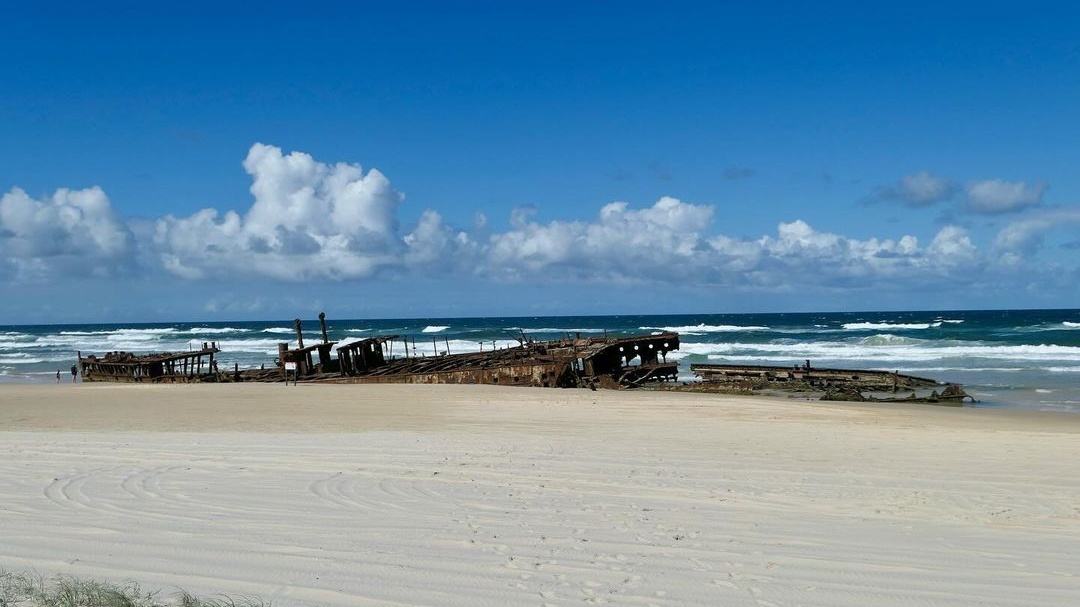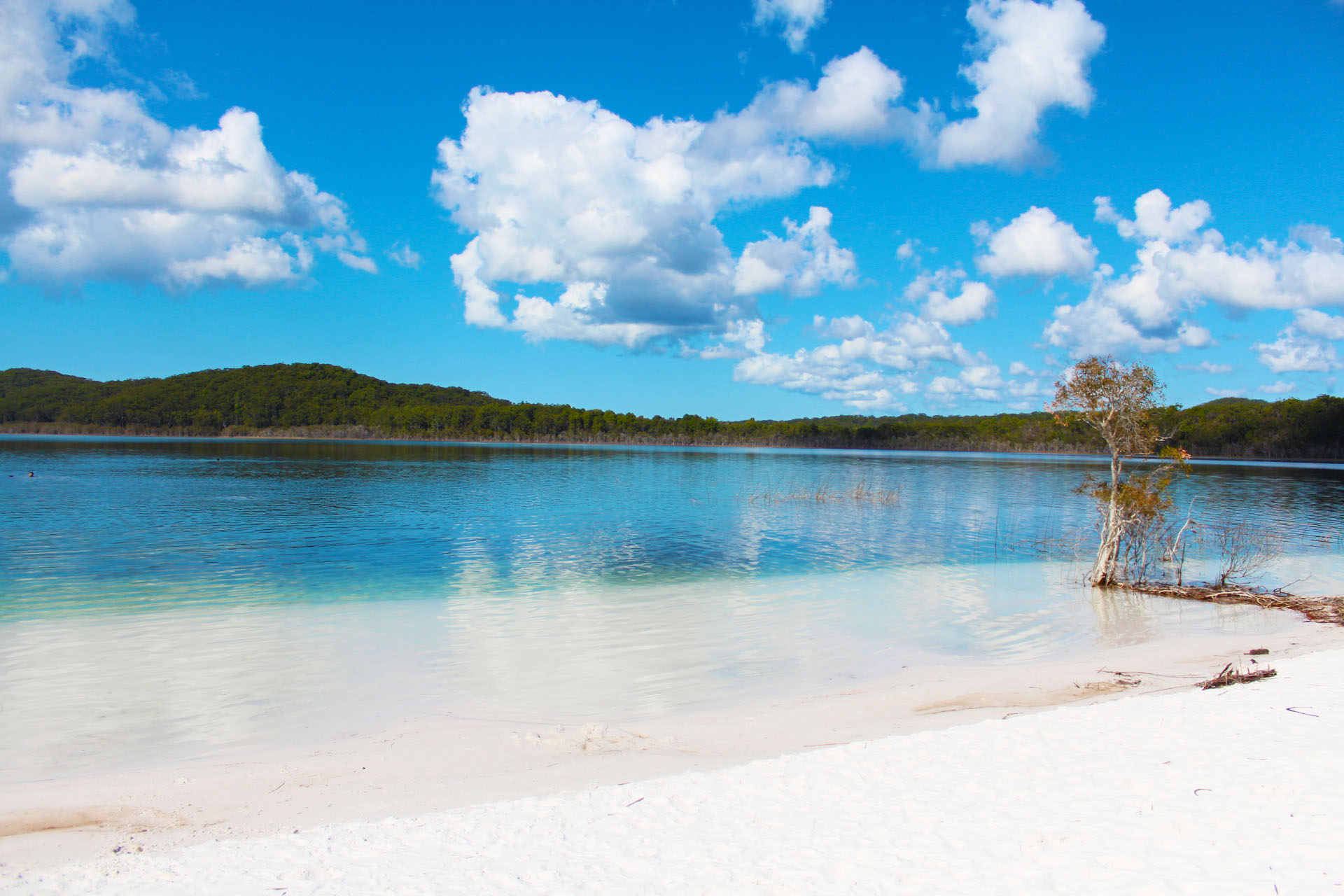



K’gari (pronounced “Gurri”, formerly Fraser Island) is the largest sand island in the world. There is no bitumen out here. Every trip is on sand, whether you are on the beach or deep in the rainforest. If you are planning a trip, you are probably wondering what driving on K’gari sand is really like.
What Is Driving on K’gari Sand Like?
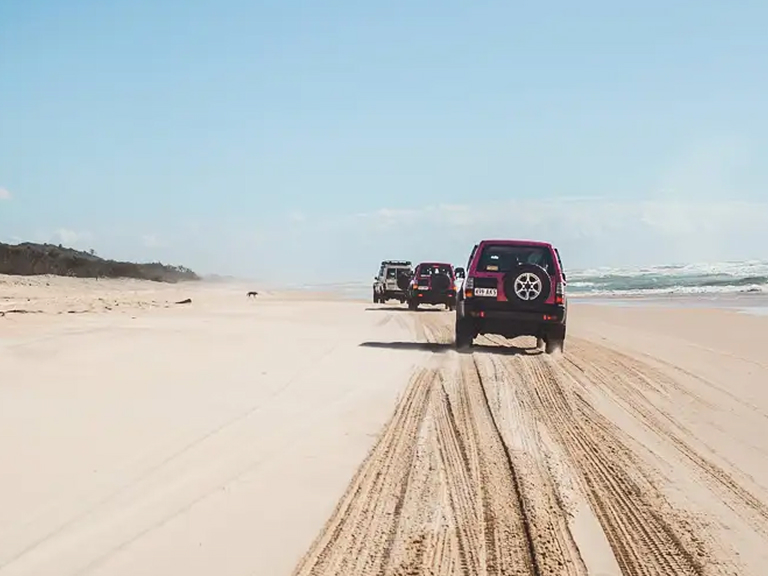
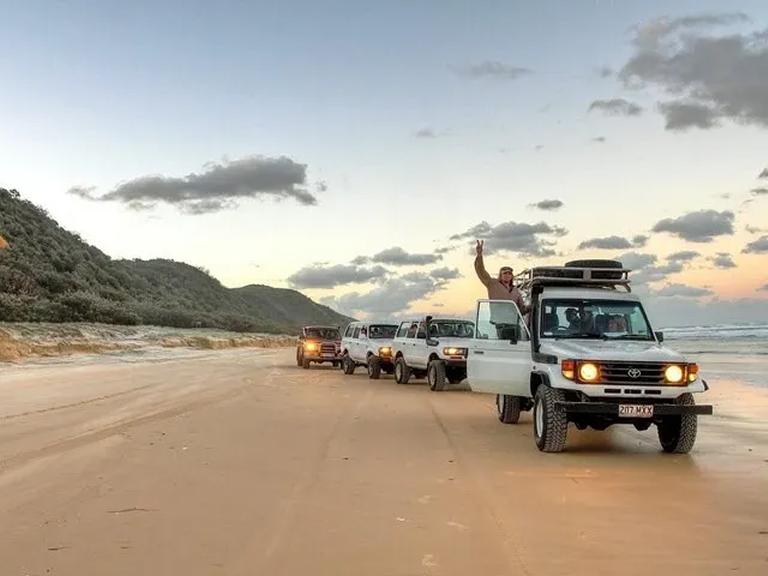
On the beach, you cruise along the shoreline with the ocean right beside you. Inland, you wind through thick rainforest on narrow, soft tracks, bouncing around like you are on a ride. You will hold the steering wheel firmly because the sand pulls the car in different directions.
Most drivers say the same thing. You need to concentrate the whole time, but the views make it worth it. One minute you are next to the surf, the next you are under tall trees with sunlight coming through the leaves.
What Are the Different Types of Sand Tracks on K’gari?
75 Mile Beach
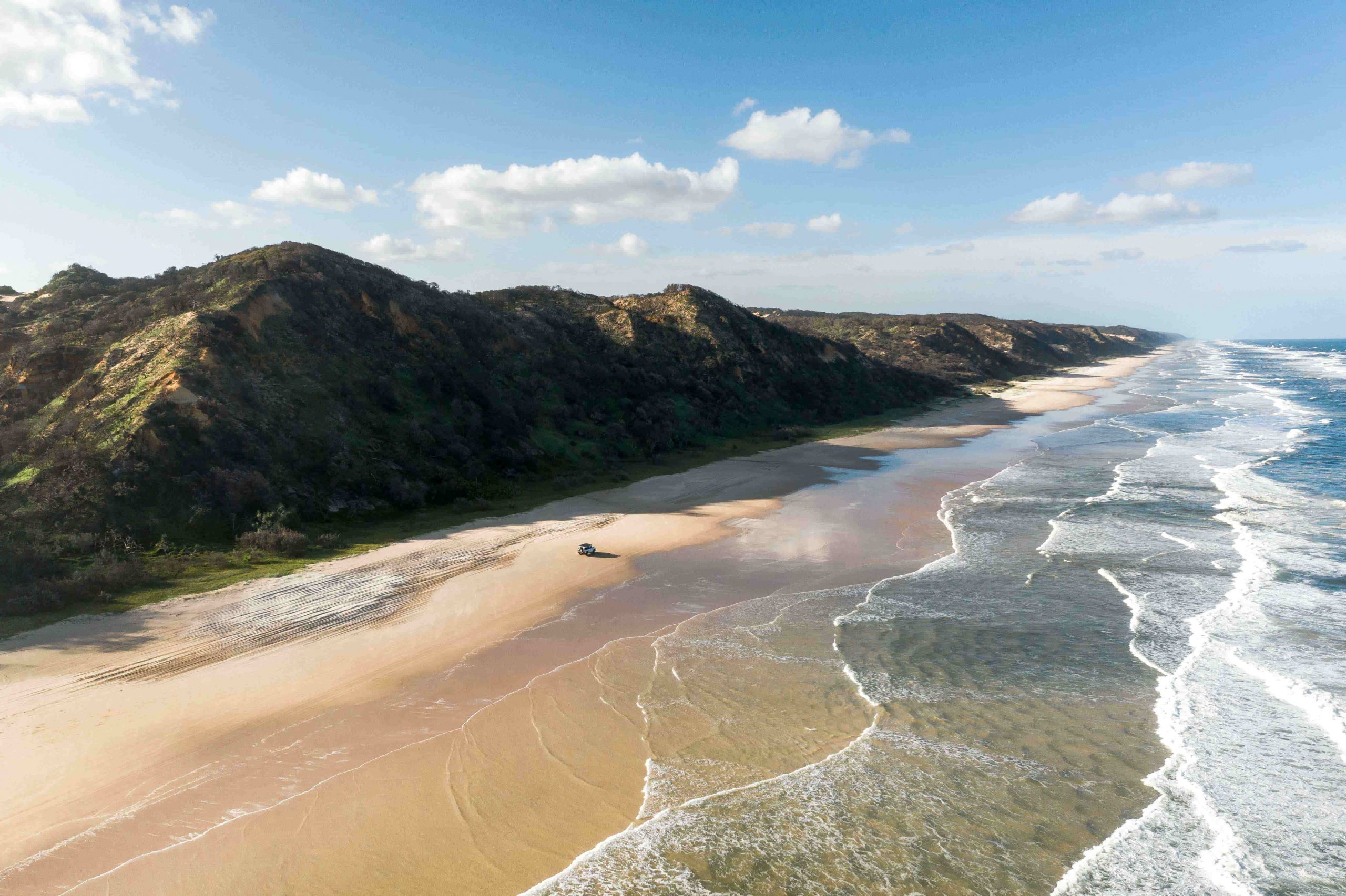
75 Mile Beach runs along the eastern side of the island and is officially a registered highway, so normal Queensland Road rules apply. You need a licence, a registered vehicle, and you must follow the speed limits. The limit is 80 km/h in open sections and 40 km/h in shared zones where pedestrians, campers, and vehicles share the space. Police conduct speed checks and breath tests on the beach, so treat it exactly like a public road.
One important rule: vehicles must give way to aircraft. Planes land and take off on 75 Mile Beach regularly, so always scan ahead and slow down when you see a plane approaching.
The beach looks easy, but it has surprises. Washouts, creek crossings, soft patches, and parked cars can appear without warning. The tide also decides when you can drive, which we cover below.
Inland Tracks
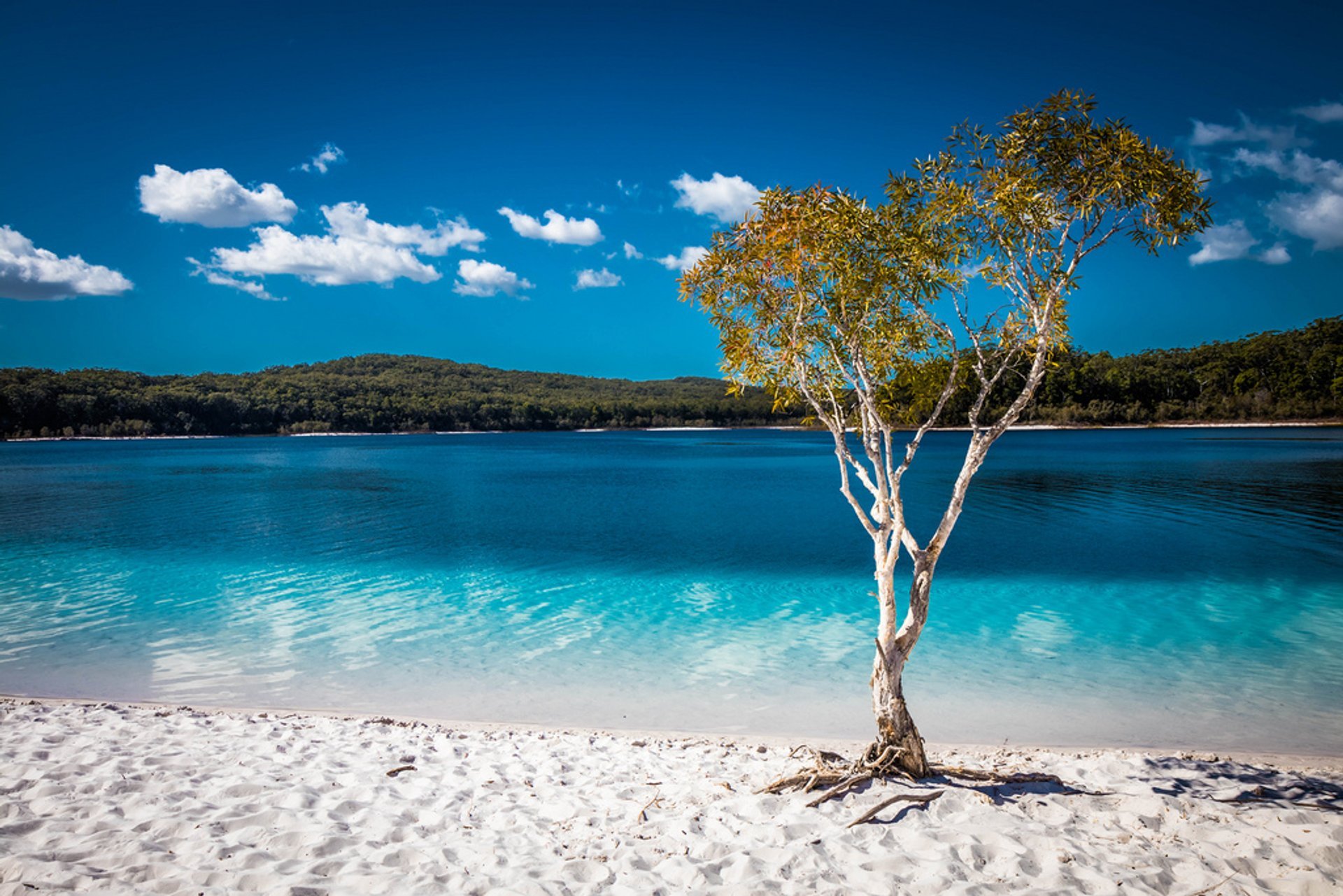
The inland tracks take you to the freshwater lakes, creeks, and rainforest including Lake McKenzie and Central Station. These tracks are narrow and often very soft with a speed limit of 30 km/h. Sections can be rough and bumpy with deep ruts and tight corners. The general rule when passing another car on a single track is that the driver closer to a passing bay pulls in.
Dingos 3 Day K'gari (Fraser Island)
Is It Difficult to Drive on K’gari for the First Time?
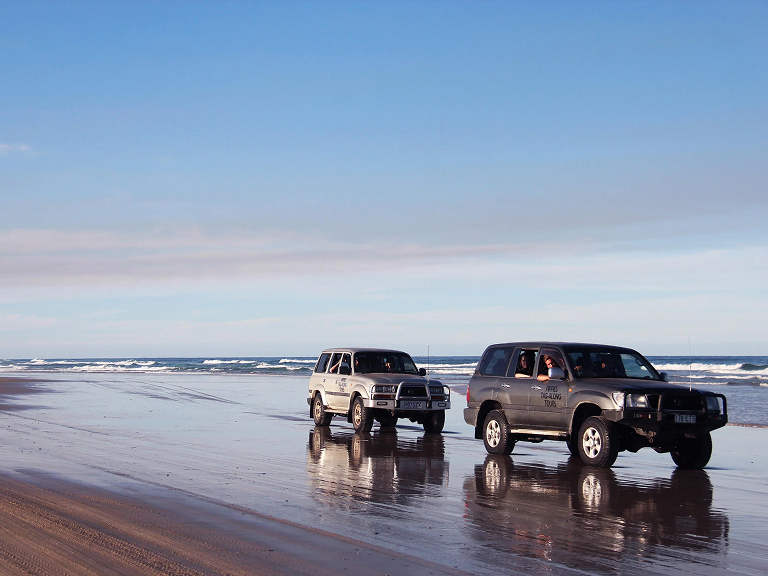
It is not impossible but it is not easy either. If you have never driven on sand, there is a learning curve. The hardest parts for beginners are keeping a steady speed on soft sand, reading the track ahead, and staying calm when the car slides. Most people get the hang of it after a few hours. Take it slow, watch what other drivers do, and do not rush. If you are nervous, a guided tour is a great way to build confidence.
What Should You Know Before Driving on K’gari?
Why You Need a 4WD
The sand is deep and soft so a normal car simply will not cope. You need a high-clearance 4WD with low-range gears. All-wheel-drive vehicles are not suitable even if they are marketed as off-road capable. The key requirement is low-range 4WD gears, not just AWD. According to Government website, a permit costs AUD $61.80 for one month or less, or AUD $311 for more than one month and up to one year. You can purchase your permit online before your trip through Queensland Parks and Wildlife Service.
How to Get to K’gari
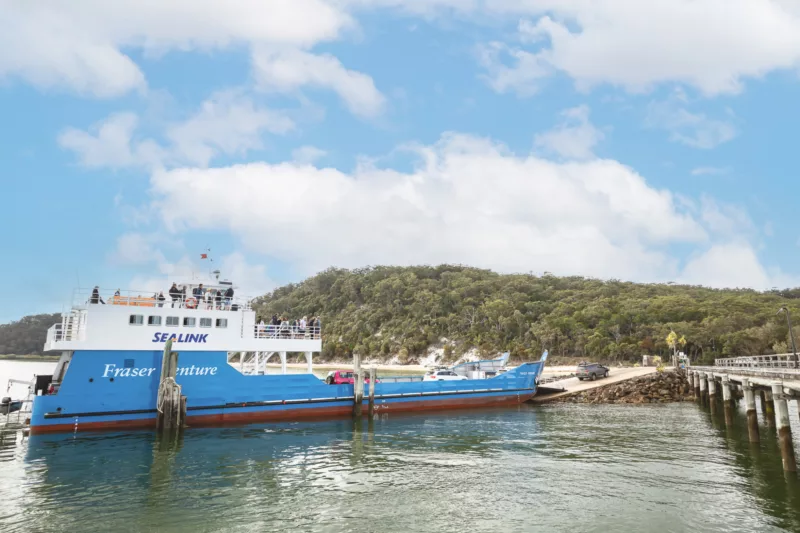
Most visitors drive their 4WD onto the island via the barge from Inskip Point near Rainbow Beach, which takes around 10 minutes. The alternative is the ferry from River Heads near Hervey Bay. Both require booking in advance, especially in peak season.
When to Drive on the Beach
Drive around low tide when the beach is wider and firmer. Avoid driving for around two hours either side of high tide when the sand softens, and parts of the beach can disappear. Check tide times every morning and plan your day around them. Never drive on the beach at night as hazards are almost impossible to see in the dark.
Book 3 Day 2 Night K'gari Tag-Along Tour
What Should You Carry for Sand Driving?
Pack these before you leave the barge:
- A tyre pressure gauge and a good air compressor
- Recovery gear including a shovel, recovery tracks, and snatch straps
- A first aid kit
- Plenty of drinking water
- Tide chart and a map
- Extra fuel as fuel stops on the island are limited
- A UHF radio or satellite phone as mobile reception is patchy
Common Challenges of Driving on K’gari
Getting bogged is the number one problem. It usually happens in soft sand when you stop on an incline or your tyres are too firm.
Tides and washouts catch drivers out regularly. Salt water is extremely damaging to vehicles so misjudging the tide can mean a costly repair bill.
Rough tracks with deep holes and ruts can damage your suspension if you go too fast.
Vehicle accidents are more common on K’gari than many travellers expect, particularly at speed on the eastern beach. Hitting a hidden hazard can cause rollovers and serious injuries so drive to the conditions at all times.
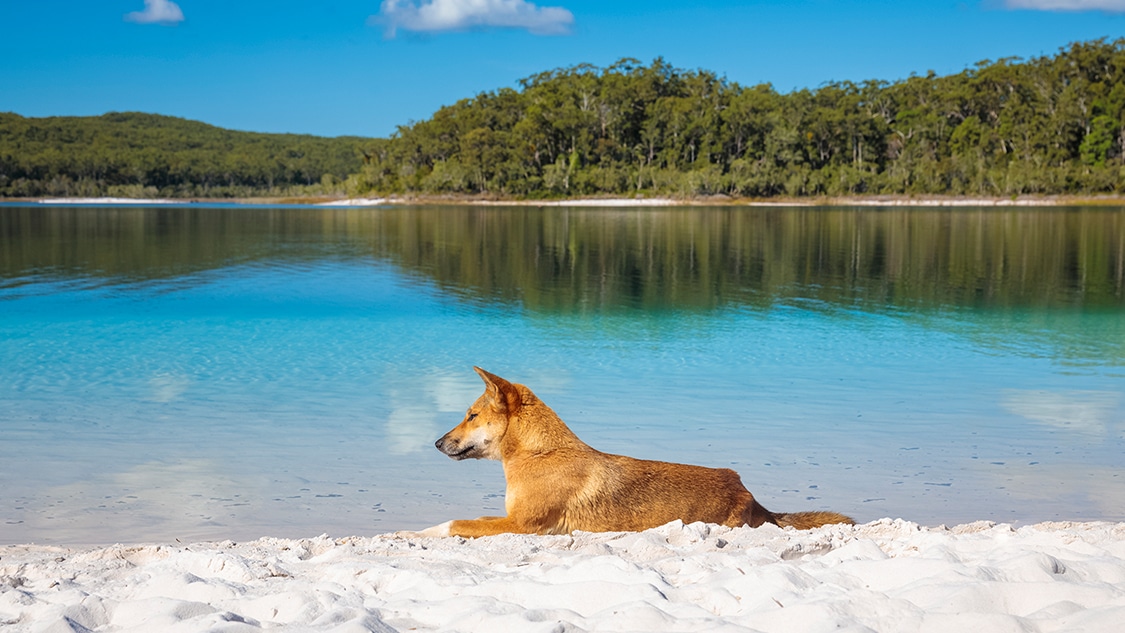
Wildlife, including dingoes, live on K’gari. They are protected wild animals. Never feed them and keep your distance, especially at dusk and dawn.
Book 2 Day K'gari (Fraser Island) 4WD Tag-Along Adventure
Tips for Driving on K’gari Sand
- Check the vehicle manufacturer’s recommended tyre pressure for sand driving and adjust it according to the terrain and driving conditions. Reinflate the tyres to the recommended pressure before returning to sealed road
- Keep your momentum steady, especially going uphill. Stopping in soft sand is how most people get bogged
- Go easy on the brakes and steering. Sudden moves cause skids so be smooth
- Drive to the conditions. The posted limit is the maximum, not the target
- Check tide times every morning before heading onto the beach
- Stay on marked tracks to protect the island’s fragile environment
- Slowdown in shared zones and near campsites, walkers, and children
- Travel with another vehicle where possible as recovery is much easier with a second car
- Wear your seatbelt. Every person, every trip
- Keep food locked away and never approach or feed dingoes
Should You Self-Drive or Join a Guided Tour?
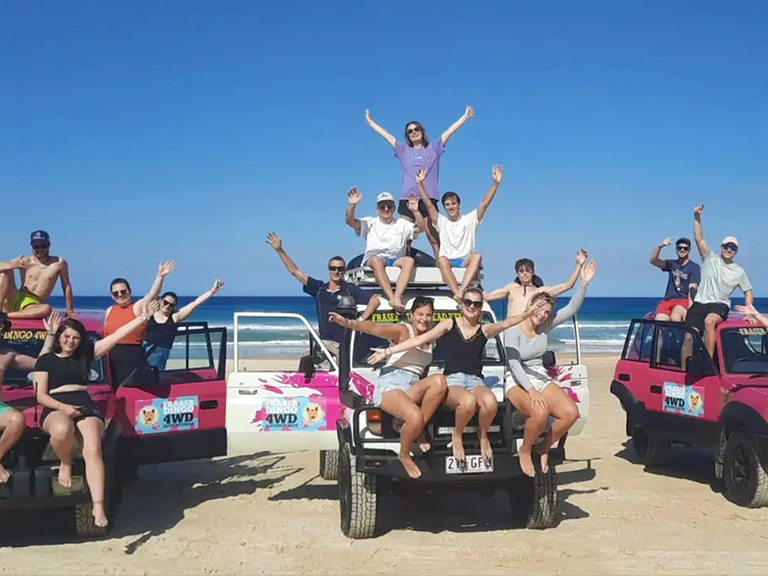
Self-drive is great if you have 4WD experience, want freedom to explore at your own pace, or are travelling with a group sharing costs. A guided Fraser Island 4WD tour is better if it is your first time on sand, you do not own a 4WD, or you want to see the main sights without the stress. Tour guides know the tracks, the tides, and the best spots so you still experience driving on K’gari sand without the pressure of doing it all yourself.
Final Thoughts
Driving on K’gari sand is one of the great Australian adventures. It is challenging, a bit wild, and incredibly rewarding. With the right 4WD, a vehicle access permit, and a careful attitude, you will have a trip worth talking about for years. Respect the island, check your tides, and if you are not confident going it alone, a guided K’gari 4WD tour is a smart and enjoyable way to start.
Frequently Asked Questions
Do you need a 4WD to drive on K’gari?
Yes. A high-clearance 4WD with low-range gears is essential. Normal cars and standard AWD vehicles are not suitable for the sand tracks or the beach.
Do you need a permit to drive on K’gari?
Yes. A vehicle access permit costs AUD $13.40 per day or AUD $53.60 annually. Purchase it online through Queensland National Parks before you travel as you cannot buy it on the island.
What is the speed limit on 75 Mile Beach?
80km/hr (maximum) on the eastern beach
30km/hr on inland roads
40km/hr in beach pedestrian areas
50km/hr on Hook Point inland road
10km/hr in shared-use areas
What tyre pressure should you use on K’gari?
Most drivers drop to around 18 to 22 PSI for sand driving. Always check your vehicle manual for the recommended range and pump tyres back to normal pressure as soon as you return to hard ground.
Is driving on K’gari suitable for beginners?
Yes, with the right preparation. Take it slow, especially if you’re nervous, and join a guided tour. Always check the tide times before you go to the beach. Most first-timers feel comfortable after a few hours on the tracks.